Interesting Facts About Classical Architecture That Still Influence Modern Buildings
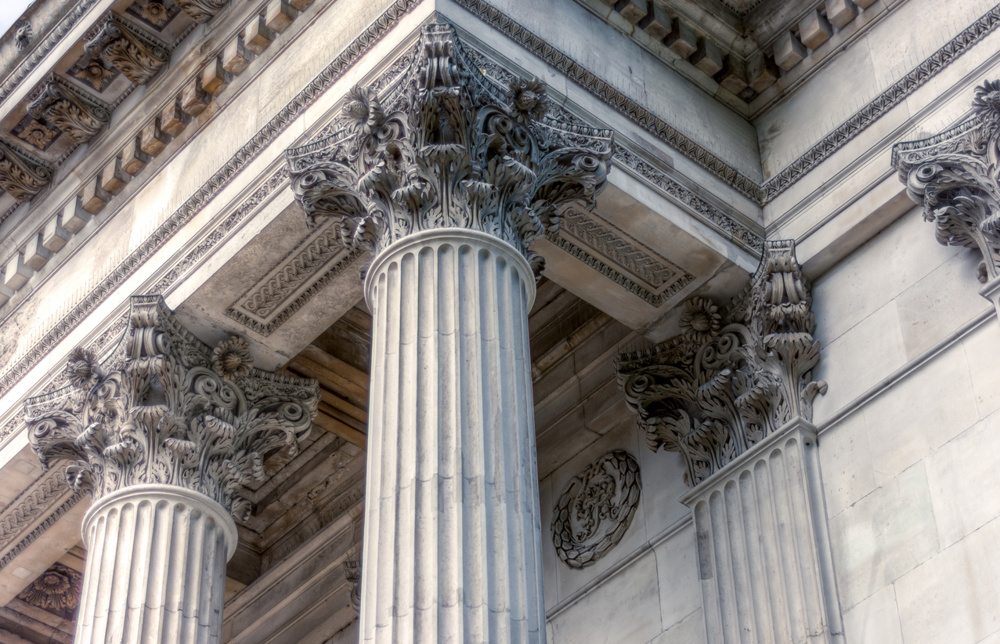
What makes classical architecture remarkable is how adaptable it has proven across centuries. Ancient builders established visual principles that survived the collapse of empires, the rise of industrial materials, and the emergence of modernism. Even contemporary glass-and-steel buildings frequently borrow classical ideas about rhythm, hierarchy, monumentality, and proportion. Architects may change the materials, but many still use the same underlying design logic.
That persistence explains why classical architecture continues influencing civic design, urban planning, and public perception today. The language of symmetry, stone, and structural clarity still communicates stability and permanence in ways few other architectural systems can.
What Makes Classical Architecture So Timeless?
Classical architecture feels timeless because it relies on proportion and balance rather than trends. Ancient Greek and Roman architects designed buildings around mathematical relationships that create visual harmony, and those relationships still appeal to people instinctively today. Symmetry plays a major role in that response. Balanced facades and evenly spaced structural elements help buildings feel organized and stable.
Human perception naturally looks for order, which is why symmetrical spaces often feel calming and coherent even before someone consciously analyzes them. Classical buildings also emphasize clarity. Entrances are obvious, structural elements feel legible, and the visual hierarchy of a building is easy to understand. Columns support roofs visibly. Pediments frame important spaces. Repetition creates rhythm without confusion.
That readability gives classical architecture an enduring sense of confidence and permanence. Another reason these buildings remain influential is material presence. Stone, marble, and carved masonry age differently from many modern materials. They weather gradually instead of appearing disposable. Even heavily damaged classical ruins still communicate durability and intention thousands of years later.
The Greek and Roman Roots Still Shaping Buildings Today
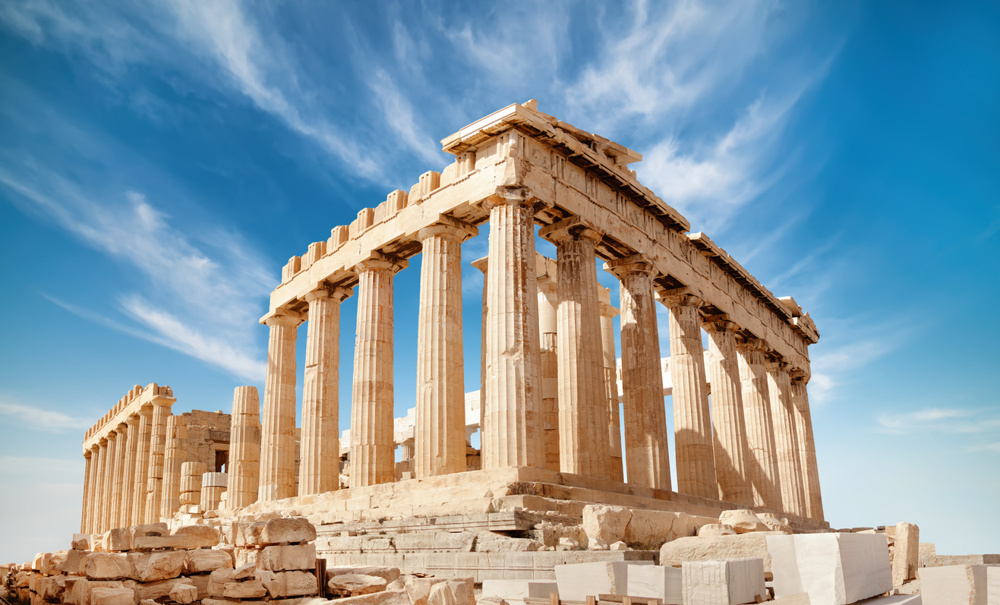
The harmonic principles behind classical architecture's timelessness didn't emerge from thin air. They trace directly back to Greek and Roman builders whose structural innovations you'll still recognize in buildings around you today. Greeks established the Doric, Ionic, and Corinthian orders, which Romans expanded by adding Tuscan and Composite variants. This order revival shaped proportional design across Western construction, influencing everything from colonnades to government buildings.
Romans then pushed further, inventing concrete and refining arches, enabling durable, versatile structures that marble alone couldn't achieve. Their vast road networks and aqueducts introduced urban symmetry that modern city planning still mirrors.
You'll spot these roots in Washington D.C.'s Union Station, Georgia's Chamber of Commerce, and the Jefferson Memorial—buildings where ancient engineering decisions remain visibly, functionally alive. The Jefferson Memorial's encircling Ionic columns and sweeping dome draw direct parallels to the Pantheon, reflecting how Roman sacred design was reinterpreted to embody American civic values.
How Classical Architecture Made Symmetry a Universal Standard
Symmetry didn't become architecture's dominant organizing principle by accident. Greek and Roman builders deliberately encoded it into every structural decision, and those decisions quietly shaped what you now accept as visually "correct." Ancient Greek temples used even column counts on their façades to eliminate any central axis ambiguity, ensuring each half mirrored the other without interruption.
Roman basilicas reinforced this through strict apse-to-apse, column-to-column alignments, embedding perceptual symmetry so deeply into structural logic that your brain now reads imbalance as error. That's cultural universality at work—symmetry crossed geographic and temporal boundaries because it aligned with how humans are wired to process visual harmony.
The Empire State Building and countless modern structures still echo this, proving classical builders didn't just construct landmarks; they programmed lasting aesthetic expectations. The Pantheon's circular plan contains multiple reflection planes, with its rotational axis reinforced through apse-to-apse, niche-to-niche, and column-to-column relationships that create an almost total spatial equilibrium.

The Proportions Behind Buildings That Feel Just Right
Proportion is one of the most important reasons classical buildings feel visually satisfying. Greek and Roman architects understood that relationships between parts of a building mattered as much as decoration itself.
Vitruvius, the Roman architect and theorist, argued that architecture should reflect harmonious relationships found in the human body and natural world. Column height, spacing, entablature dimensions, and room proportions were carefully calculated to create balance rather than randomness.
These systems were not arbitrary. Ancient builders believed proportion shaped emotional response. Buildings with coherent proportional relationships feel stable and intentional, while poorly proportioned spaces often feel awkward or visually uncomfortable.
The influence of these ideas survived long after antiquity. Renaissance architects revived classical proportional systems, while modern designers such as Le Corbusier adapted them into contemporary frameworks like the Modulor. Even minimalist modern architecture often depends heavily on precise proportion to achieve elegance and clarity.
Step deeper into the world of architecture with more fascinating facts and trivia.
Why Classical Architecture Still Shapes Luxury Retail and Modern Branding
Classical architecture influences more than civic buildings. Luxury brands frequently borrow classical design language because it communicates permanence, exclusivity, and prestige almost instantly. High-end retail stores often use symmetrical entrances, monumental staircases, stone facades, and carefully proportioned interiors to create a sense of importance around products.
Even when buildings appear modern, many still rely on classical ideas about procession, hierarchy, and spatial rhythm. Apple Stores provide a strong example of this influence. Their minimalist spaces depend on symmetry, clear circulation, and carefully controlled proportions in ways that echo classical spatial logic, even without ornamentation.
Luxury fashion houses similarly use marble, colonnades, and grand entrances to create environments associated with refinement and authority. Hotels and financial institutions also rely heavily on classical cues. Tall stone facades, repetitive structural rhythms, and formal entrances help create trust and stability visually. These design decisions affect how people perceive institutions emotionally before any interaction occurs.
Columns and Pediments in Classical and Modern Civic Buildings
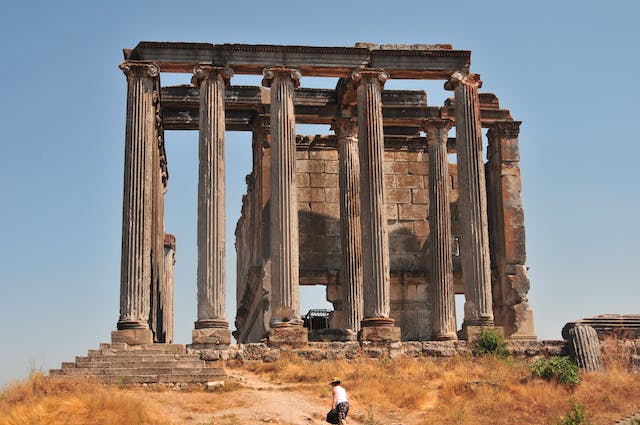
Columns and pediments define the visual language of civic authority, and you'll find them anchoring everything from the Parthenon to your city's courthouse. Greek builders used Doric columns with plain, sturdy column capitals to support triangular pediments that sheltered sculptural narratives honoring the gods.
Romans shifted that structural role toward pure decoration, and Renaissance architects ran with it. You'll notice pediment variations throughout civic architecture's timeline. Palladio alternated triangular and segmental pediments across his facades, creating rhythmic tension that later inspired Inigo Jones and American colonial builders.
Washington D.C.'s Neoclassical buildings replicate Roman grandeur through columns, entablatures, and pediments, while Chicago's Beaux-Arts institutions, energized by the 1893 World's Columbian Exposition, layered cornices and sculpted pediments onto museums like the Field Museum.
Why Stone Is Making a Comeback Over Glass and Steel
While glass and steel came to dominate 20th-century construction, stone is staging a serious comeback—and the numbers back it up. Stone's resurgence stems from hard environmental facts: it produces 70% less CO2 per square meter than steel or concrete and carries 98% lower embodied carbon than fired clay bricks. As a load-bearing material, it cuts a structure's carbon footprint by up to 90%.
This isn't just theory. A West London stone structure already proves those savings in practice, and London's Building Centre has showcased stone's structural potential to the industry. Quarry innovations now enable CNC-cut parabolic shapes, pushing design possibilities beyond what glass and steel typically allow.
Add 100% recyclability and minimal maintenance, and you've got a material that's both ancient and urgently relevant. Architects and engineers have taken note, with Gilles Perraudin's foundational work in massive-stone construction helping to formally establish stone as a viable modern structural material.
How Classical Architecture Defines Monumentality Beyond Scale
When most people think of monumental architecture, sheer size comes to mind first—but classical builders understood that scale alone doesn't create lasting impact.
True monumentality combined three powerful elements:
- Spiritual monumentality — A structure must convey eternity, like the Parthenon's sense of permanence that feels impossible to alter.
- Urban framing — Buildings worked collectively, transforming entire cities into orchestrated visual sequences rather than isolated impressive structures.
- Elaboration over practicality — Craftsmanship exceeding functional requirements distinguished communities and signaled prestige beyond mere dimensions.
Classical builders designed experiences, not just structures, and that distinction still shapes how architects approach meaningful civic design today. Greek engineering focused specifically on materials in compression, deliberately avoiding tensile action in stone to maintain structural integrity across their most enduring buildings.
The Classical Language Modern Architects Are Still Using
That staging of space, meaning, and craftsmanship didn't vanish when steel and concrete replaced marble—it migrated. Modern architects still draw from classical design's core language, applying proportion, symmetry, and structural legibility to contemporary buildings. You'll recognize it in how civic structures communicate authority through clear hierarchies rather than ornament alone.
The five classical orders, symbolic motifs, and material palettes haven't disappeared—they've been reinterpreted. Today's practitioners use these tools because classical architecture solved real problems: how to signal importance, shape public space, and create entrances that feel obvious and intentional.
What you're seeing in modern civic architecture isn't nostalgia. It's a working vocabulary refined over centuries, now expressed through glass, steel, and engineered composites while still delivering clarity, dignity, and lasting public meaning. Classical and modern architecture coexist without conflict, each valued as a distinct achievement that continues to draw meaning and inspiration from the other.
Why Classical Architecture Remains the Benchmark for Civic Design
Classical architecture endures as the standard for civic design because it does something most modern approaches don't: it communicates. When you walk past a federal courthouse or capitol building, you're reading civic symbolism embedded in stone—columns, pediments, and proportions that signal authority, accountability, and democratic continuity.
Three reasons classical design still sets the benchmark:
- Public trust – Over 72% of Americans prefer traditional styles for federal buildings, reflecting genuine cultural alignment.
- Proven legibility – Classical buildings make entrances obvious and hierarchy readable without explanation.
- Durability of meaning – These structures were built to last centuries, and their symbolism has too.
You're not just looking at old buildings. You're looking at architecture that still actively shapes how citizens relate to the government. Tradition supplies a long-tested grammar of proportion and hierarchy, ensuring that what matters most in a civic building is made most visible to the public it serves.
Conclusion
Classical architecture continues influencing modern buildings because it solved design problems that remain relevant centuries later. Symmetry still helps organize public space clearly, proportion still shapes how people emotionally experience interiors, and monumental materials like stone still communicate permanence more effectively than many modern alternatives.
Even highly contemporary buildings often rely on classical ideas underneath their glass, steel, and minimalist surfaces. As architecture evolves alongside sustainability concerns, digital design tools, and rapidly changing urban environments, many classical principles are becoming relevant again in unexpected ways.