Houston’s Skyscraper Evolution: A Visual Guide
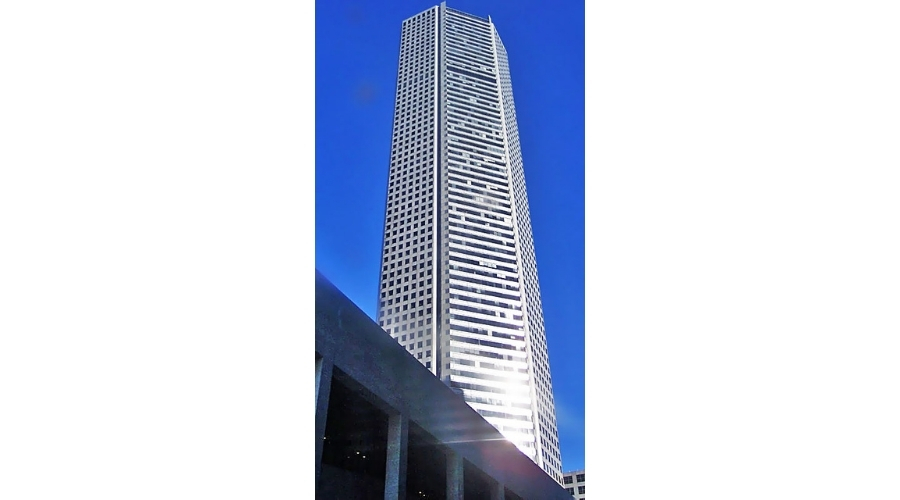
Houston's skyline journey began with the modest six-story Binz Building (1895), evolving dramatically as new construction methods made taller, more slender structures practical. You'll see the oil industry's influence in the Art Deco Gulf Building and the Mayan-inspired Petroleum Building. Today's landscape features sustainable innovations like 609 Main at Texas and the towering JPMorgan Chase Tower at 1,002 feet. The visual timeline reveals how economic ambition transformed prairie into architectural prominence.
The Binz Building: Houston's First High-Rise Adventure (1895)
Six stories might seem modest by today's standards, but in 1895, the Binz Building towered over Houston's landscape as the city's first widely recognized "skyscraper." Standing at the bustling intersection of Main Street and Texas Avenue, this architectural splendor marked Houston's ambitious vertical growth.
Designed by Swedish-born Olle Lorehn, the structure combined brick and stone cladding with Italian Renaissance details. You'd have been amazed by its modern hydraulic elevator—a revolutionary feature for one of Houston's early commercial hubs. The building relied on heavy timber and masonry construction rather than the structural steel skeleton used in later high-rises, yet it still set a new standard for downtown development.
Though demolished in 1951, the Binz Building's legacy continues to influence Houston's architectural identity and remains a pivotal chapter in the city's skyward journey. German immigrant Jacob Binz spared no expense, with construction costs reaching $120,000 after deliberate 28-day concrete curing slowed the build but increased strength.
Steel Revolution: How Metal Frames Changed the Skyline
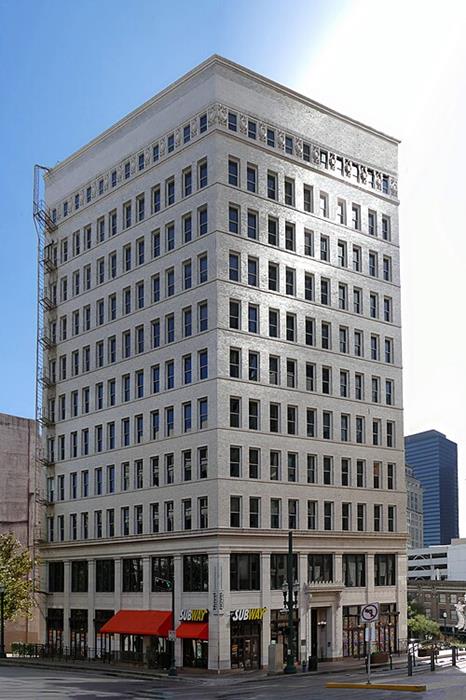
While the Binz Building marked Houston's first vertical ambitions, it was the broader adoption of steel framing that truly transformed the city's skyline. The 1905 First National Bank Building introduced Houston to steel-frame versatility, enabling an eight-story structure that helped redefine what "modern" could look like downtown.
When the Scanlan Building rose to 11 stories in 1909, it showcased construction methods that made true high-rises more practical and repeatable. Steel's superior strength-to-weight ratio allowed for taller, more slender buildings with larger windows and less bulky walls than traditional masonry construction. Improvements in steel production made materials for Houston's growing skyline more accessible and economical.
This innovation didn't just change building heights—it reshaped Houston's entire urban landscape, accelerating construction timelines while supporting both commercial density and architectural experimentation that would define the city's development for decades to come.
The Battle for Texas Sky Supremacy: Houston vs. Dallas
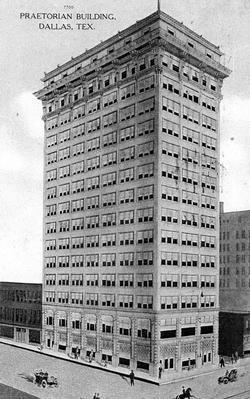
Steel frames didn't just transform Houston's skyline—they fueled a long-running rivalry with Dallas that often plays out in vertical feet and marquee projects. You'll notice both cities have taken turns defining Texas' "tallest" moments, as financial booms, corporate relocations, and development cycles shifted momentum back and forth.
This architectural competition reflects deeper regional economic rivalries. Dallas made an early statement with the Praetorian Building and later added major downtown towers in the mid-to-late 20th century, while Houston's modern skyline accelerated as energy and finance poured into the region. Houston's downtown profile expanded steadily through the late 20th century, anchored by towers that helped establish its instantly recognizable silhouette.
Meanwhile, shifting urban priorities are evident across the state as Austin's high-rise boom continues adding new height and density. Texas' skyline hierarchy keeps evolving, and Houston remains central to that story.
Oil Boom Towers: Energy Industry's Vertical Legacy
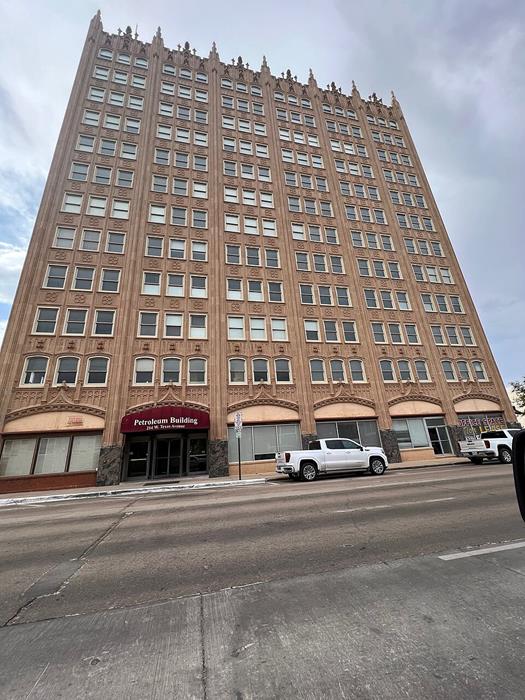
When crude oil erupted from Spindletop in 1901, it didn't just launch Texas' petroleum industry—it permanently shaped Houston's architectural identity. The 1927 Petroleum Building (now commonly known as the Great Southwest Building) became a symbol of the era, housing oil and business interests in a prominent downtown address. After completion, it also hosted the exclusive Tejas Club from 1929 to 1973 on its top floor.
These towers combined practicality with artistic vision. You'll notice the Art Deco Gulf Building and the Petroleum Building's Mayan-inspired reliefs merging bold influences with modern skyscraper forms. As technology improved, later energy-era buildings introduced performance-minded details that helped address heat and glare, signaling a gradual shift toward climate-responsive design.
As corporate legacies, these landmarks didn't just centralize operations—they helped cement Houston as an energy capital, with preserved facades still telling the story of oil's urban impact.
Glass Giants: Architectural Innovations Reshaping Downtown
The energy industry's architectural legacy evolved dramatically in the late 20th century as glass became a defining skyscraper medium. You'll notice this transformation in landmarks like Pennzoil Place, where two trapezoidal towers connected by a glass atrium helped reframe how public space and street-level experience could work downtown.
Today's glass giants like 609 Main at Texas showcase how sustainable materials and systems have advanced. High-performance glazing and modern air-delivery strategies can maximize daylight while improving energy efficiency and occupant comfort. These transparent facades reflect Houston's evolution into a global business hub, emphasizing openness and modernity. The JPMorgan Chase Tower remains the tallest in Houston at 1,002 feet with 75 floors, anchoring the city's skyline.
The Williams Tower's distinctive triangular top and Bank of America Center's postmodern profile demonstrate how architects blend functionality with visual impact, creating structures that manage wind forces while delivering panoramic views and deeper daylight penetration into office spaces.
I.M. Pei's Masterpiece: The Story Behind JPMorgan Chase Tower
Rising majestically above Houston's skyline, I.M. Pei's 75-story masterpiece stands as the city's tallest building at 1,002 feet. Completed in the early 1980s, the tower's iconic architectural design features a distinctive five-sided shape—rare among major skyscrapers.
You'll notice the pale gray granite exterior complemented by expansive windows that flood the roughly 2.2 million square feet of office space with natural light. At the base, Joan Miró's "Personage and Birds" anchors the plaza. The building includes an active banking presence at street level, reinforcing its role as both a workplace and a landmark.
Recent revitalization efforts in the early 2020s refreshed key public areas with new entry elements, upgraded outdoor space, and modern amenities designed for today's tenants. These updates maintain JPMorgan Chase Tower's significance as both a symbol of Houston's economic growth and a monument to Pei's architectural legacy.
From Capitol to Condos: The Rice Hotel's Remarkable Transformation
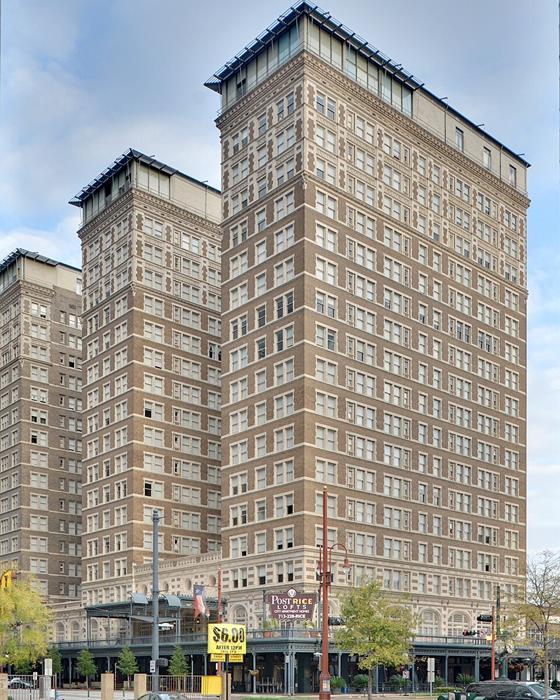
Standing on the land that once housed the Capitol of the Republic of Texas, the Rice Hotel represents one of Houston's most dramatic architectural evolutions.
Originally a hotel property tied to William Marsh Rice and later replaced, the site transformed when developer Jesse H. Jones constructed a 17-story hotel in 1913. Later expanded into an "E" configuration in 1925, it became a downtown icon with a reputation for major events and high-profile guests. The hotel's site has a rich history dating back to Houston's early Republic-era chapter, when the city served as the capital of the Republic of Texas.
Despite pioneering amenities like early public-room air conditioning and hosting major civic moments, the Rice closed in 1977 after being declared unsafe under stricter fire-safety requirements. After years of vacancy, it achieved architectural revitalization in the 1990s as residential space.
Now listed on the National Register of Historic Places, the building maintains its cultural icon status while serving a completely new purpose.
Preservation Amid Progress: Historic Buildings in a Modern Skyline
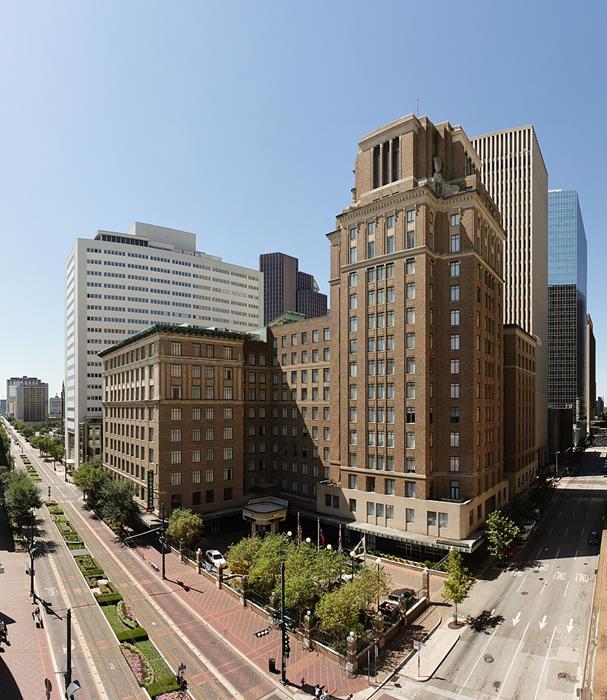
While modern glass towers dominate Houston's skyline, the city's architectural story remains richly preserved through historic skyscrapers that anchor its downtown identity. You'll find treasures like the Humble Building and the Niels Esperson Building standing proudly among sleek contemporary structures.
These landmarks benefit from preservation incentive programs that encourage their maintenance while adapting to modern needs. The Federal Land Bank Building exemplifies successful adaptive reuse strategies, having undergone thoughtful renovations that respect its historic character. The area is further enhanced by the downtown tunnel network that connects many historic and modern structures, including major office towers near JPMorgan Chase Tower.
As you explore downtown, you'll notice how these historic buildings contribute both cultural depth and economic significance. Architectural walking tours highlight this harmonious blend of old and new, where pre-war structures complement later innovations like Pennzoil Place, creating a skyline that tells Houston's evolution from prairie town to thriving metropolis.
Engineering the Future: Sustainable Skyscrapers in Space City
Houston has turned over a new leaf in high-rise development, embracing sustainability as a cornerstone of its architectural future. You'll notice LEED and ENERGY STAR certifications increasingly shaping how towers are designed and operated, with buildings incorporating energy-efficient systems and water-saving strategies that cut operating costs while improving performance. Texas Tower exemplifies this trend as a LEED Platinum project with modern sustainability-forward design choices.
Rather than replacing steel and concrete wholesale, newer projects often blend proven structural methods with smarter envelopes, efficient mechanical systems, and lower-impact materials where feasible. Rooftops and terraces increasingly incorporate landscaped space that can help with stormwater management and comfort, while also improving how towers engage the street and public realm.
These green strategies support community-facing design through more welcoming ground floors and outdoor areas, helping downtown feel more livable as it grows. Houston's climate planning and resilience conversations continue nudging development toward efficiency, adaptability, and long-term durability that fits Space City's pioneering spirit.