Architectural Landmarks to Explore When Visiting Texas
You'll discover Texas architecture that spans four centuries, from Spanish colonial missions built in the 1700s to modernist landmarks designed in the 21st century. Don't miss San Antonio's five missions, including the Alamo, or Austin's Texas State Capitol with its Italian Renaissance Revival dome that stands taller than the U.S. Capitol. Dallas's Fair Park showcases one of the largest collections of Art Deco architecture in the country, while the Old Red Museum exemplifies Romanesque Revival grandeur. Below, you'll find detailed guides to these landmarks and more architectural treasures across the state.
Spanish Colonial Missions That Built Texas
View this post on Instagram
While Texas often conjures images of cowboys and oil derricks, the state's architectural foundation was shaped by Spanish colonial missions constructed between the late 1600s and the late 1700s. You'll find these structures primarily in San Antonio and El Paso, with additional early mission sites historically established in East Texas. Mission construction reflected the realities of frontier life, using local stone, adobe, and timber, and many were relocated or rebuilt due to environmental and political challenges. The most famous, Mission San Antonio de Valero (the Alamo), was founded in 1718 and moved to its current location in 1724. The San Antonio Missions National Historical Park, a UNESCO World Heritage Site, preserves four active missions—Concepción, San José, San Juan, and Espada—alongside the Alamo. These sites represent some of the best-preserved examples of Spanish colonial architecture in North America. Beyond architecture, the missions served as religious and cultural centers, where Spanish missionaries and Indigenous communities interacted, leaving a lasting imprint on Texas history and identity.
Fair Park's Art Deco: The 1936 Texas Centennial in Stone
View this post on Instagram
Two centuries after Spanish missionaries built Texas's earliest landmarks, the state celebrated its centennial of independence with an ambitious architectural showcase. In 1936, Dallas transformed Fair Park into an Art Deco centerpiece for the Texas Centennial Exposition, constructing dozens of buildings in less than a year. Architect George Dahl helped define a distinctive “Texanic” style—bold, symmetrical, and richly decorated with murals and sculptures. You'll find the Hall of State featuring towering limestone columns and bronze doors adorned with imagery representing Texas industries such as agriculture and oil. The site also includes an expansive Esplanade with reflecting pools and monumental sculptures. Today, Fair Park remains one of the largest intact Art Deco complexes in the United States, continuing to host the State Fair of Texas and several museums within its historic grounds.
Old Red Museum and Romanesque Revival Dallas
View this post on Instagram
Rising prominently in downtown Dallas, the Old Red Museum of Dallas County History & Culture has defined the city’s architectural identity since 1892. Designed by architect Max A. Orlopp Jr., this Richardsonian Romanesque landmark features red sandstone walls, rounded arches, and distinctive corner towers. The structure was built using Pecos red sandstone and granite accents, combining durability with visual impact after earlier courthouses were lost to fire. Its restoration and conversion into a museum in 2007 preserved its historic character while introducing modern exhibition spaces. Listed on the National Register of Historic Places, the building remains a key stop for visitors exploring Dallas’s architectural heritage.
Historic Texas Courthouses: Architectural Icons of Civic Design
Across Texas, historic courthouses stand as some of the state’s most visually striking and culturally significant landmarks. Built primarily in the late 19th and early 20th centuries, these structures reflect styles ranging from Romanesque Revival to Beaux-Arts and Second Empire. The Fayette County Courthouse in La Grange, designed by noted architect J. Riely Gordon and completed in 1891, showcases rich Romanesque detailing with sandstone walls, ornate arches, and a commanding clock tower. It is widely considered one of the most beautiful courthouses in Texas. In Ellis County, the courthouse in Waxahachie stands as a grand example of Richardsonian Romanesque architecture, built in 1897 using pink granite and limestone. Its elaborate clock tower and intricate stonework make it a centerpiece of the town’s historic district. These courthouses continue to function as civic buildings while also serving as architectural landmarks, offering visitors a glimpse into Texas’s governmental and design history.
Texas State Capitol: Austin's Renaissance Revival Icon
Towering over downtown Austin, the Texas State Capitol stands at 311 feet, making it taller than the U.S. Capitol in Washington, D.C. Designed by architect Elijah E. Myers, the building reflects Italian Renaissance Revival style with grand proportions and detailed stonework. Constructed between 1882 and 1888 using Sunset Red Granite from Central Texas, the Capitol required a large workforce and extensive resources. Funding was supported in part through the allocation of public lands in the Texas Panhandle, which were later developed and sold. Inside, the Capitol contains hundreds of rooms, including legislative chambers and offices, while the iconic Goddess of Liberty statue crowns the dome. A major underground expansion completed in 1993 added additional space while preserving the building’s historic exterior.
San Fernando Cathedral: A Historic Religious Landmark in San Antonio
View this post on Instagram
Established in 1731, San Fernando Cathedral is one of the oldest continuously functioning religious communities in the United States. Located in downtown San Antonio, it remains an important spiritual and historical landmark. The original church structure dates to the 18th century, though later renovations introduced Gothic Revival elements, including its twin towers and ornate façade. The cathedral has witnessed key moments in Texas history, including events surrounding the Texas Revolution. Today, it continues to serve as an active place of worship and a central feature of San Antonio’s historic district.
Dallas City Hall: I.M. Pei's Modernist Landmark
Dallas City Hall stands out with its bold, inverted pyramid design, created by renowned architect I.M. Pei and completed in 1978. The building’s forward-leaning structure gives it a distinctive silhouette that contrasts with traditional vertical skyscrapers. Constructed from reinforced concrete, the design improves energy efficiency by shading lower floors. Inside, the expansive Great Court features a dramatic open space used for civic functions. The surrounding plaza includes Henry Moore’s sculpture “The Dallas Piece” and a reflecting pool, making the site both an architectural and public gathering space.
Margaret Hunt Hill Bridge: Sculpture in Steel
View this post on Instagram
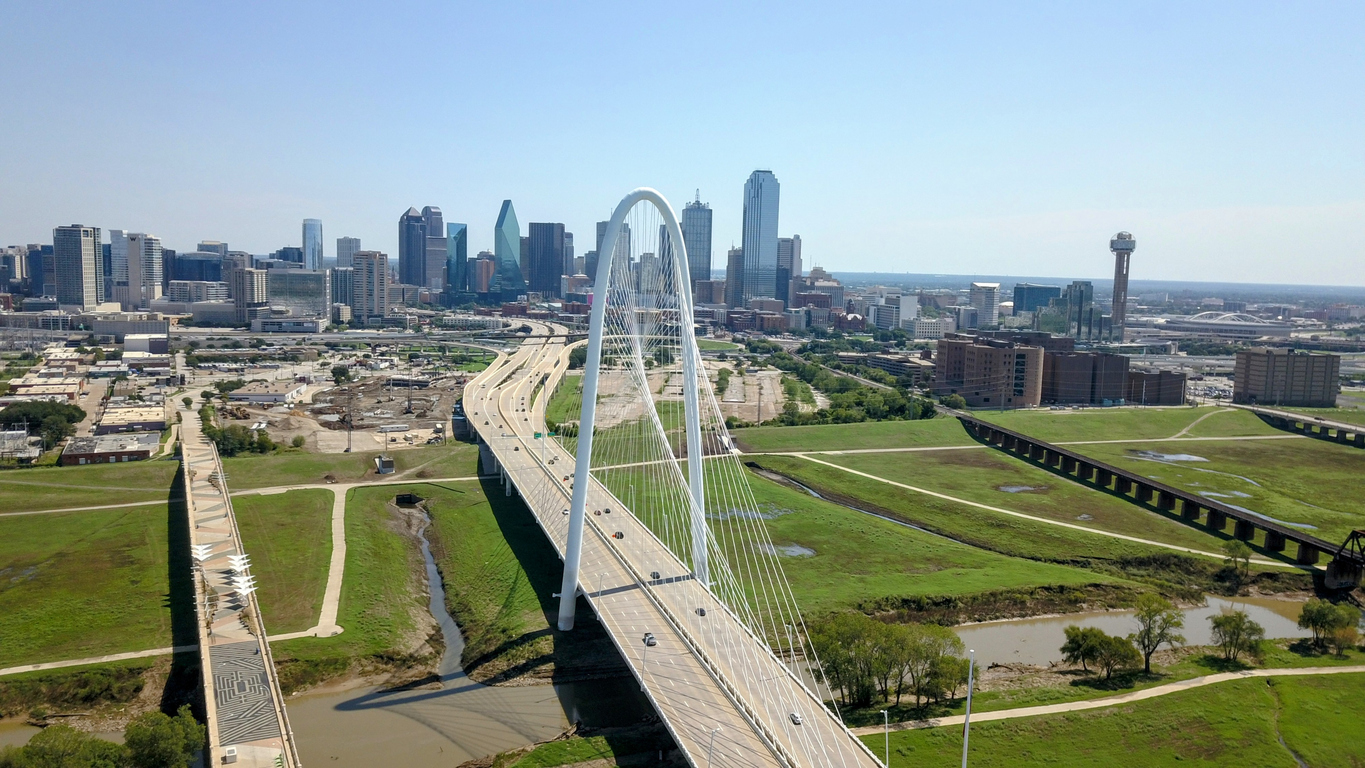
Spanning the Trinity River in Dallas, the Margaret Hunt Hill Bridge is a striking example of modern engineering and design. Created by architect Santiago Calatrava and opened in 2012, the bridge features a 400-foot steel arch with a cable-stayed design. Its clean white structure and sweeping lines have become a defining feature of the Dallas skyline. The bridge connects downtown Dallas to West Dallas and plays a key role in ongoing redevelopment efforts along the Trinity River corridor.
Marfa and the Chinati Foundation: Minimalism in the West Texas Desert
View this post on Instagram
In the remote town of Marfa, contemporary architecture takes on a radically different form through the work of artist Donald Judd and the Chinati Foundation. Established in 1986 on a former military base, the site features large-scale installations housed in converted artillery sheds and industrial buildings, where architecture and art are intentionally integrated. Clean lines, open space, and natural light define the minimalist design philosophy. The surrounding desert landscape plays a key role in the experience, making Marfa a destination not only for art enthusiasts but also for those interested in adaptive reuse and modern architectural concepts. Nearby landmarks, including the Marfa Courthouse and the famous Marfa Lights viewing area, add to the town’s unique architectural and cultural appeal.
Kimbell Art Museum: Architecture as an Experience
View this post on Instagram
The Kimbell Art Museum in Fort Worth is widely regarded as one of the finest examples of modern museum architecture. Designed by Louis I. Kahn and completed in 1972, the building is known for its elegant use of natural light. The structure features a series of cycloid concrete vaults, each fitted with skylights that diffuse sunlight evenly throughout the galleries. This design enhances the viewing experience while maintaining a calm and balanced atmosphere. The museum’s thoughtful integration of concrete, travertine, and wood materials reflects Kahn’s philosophy of creating spaces that feel both monumental and human in scale.
Fort Worth Stockyards: Preserving Western Architectural Heritage
View this post on Instagram
The Fort Worth Stockyards National Historic District offers a distinct contrast to Texas’s urban and modern landmarks, preserving the look and feel of the state’s cattle-driving era. Visitors will find wooden corrals, brick walkways, historic barns, and early 20th-century commercial buildings that reflect Western and livestock industry architecture. Structures like the Livestock Exchange Building and the Stockyards Station highlight the area’s role as a major hub for cattle trade. Daily cattle drives, restored storefronts, and heritage attractions make the Stockyards one of the most immersive historic districts in Texas, where architecture and culture come together to tell the story of the American West.
Perot Museum of Nature and Science: A Contemporary Landmark
View this post on Instagram
Dallas’s Perot Museum of Nature and Science, designed by Morphosis Architects and opened in 2012, represents a bold example of contemporary architecture. Its cube-like structure appears to rise from the landscape, with textured concrete panels and glass elements creating a modern, dynamic form. The building incorporates sustainable design features, including energy-efficient systems and water conservation elements. Inside, interactive exhibits are housed within a visually striking interior that emphasizes movement and exploration.
Williams Tower: Houston's Postmodern Skyscraper
View this post on Instagram
Houston’s Williams Tower rises 64 stories above the Uptown District, reflecting the city’s growth during the 1980s energy boom. Designed by Philip Johnson and John Burgee, the tower features postmodern styling with strong vertical lines and reflective glass. Standing at 901 feet, it remains one of the tallest buildings in Texas. Its sleek design and prominent location make it a recognizable part of Houston’s skyline. Adjacent to the tower is the Gerald D. Hines Waterwall Park, where a dramatic 64-foot cascading water feature provides a popular gathering space for visitors.
Heights Theater: A Restored Historic Venue in Houston
Located in Houston’s historic Heights neighborhood, the Heights Theater blends early 20th-century design with modern restoration. Originally built in 1929 in a Mission Revival style, it was later updated with Art Moderne features, including smooth stucco walls and a vertical neon sign. After surviving fire damage and decades of decline, the theater was carefully restored and reopened as a live performance venue. Today, it stands as a testament to Houston’s commitment to preserving its architectural heritage.
Related posts